
Artificial IntelligenceWeb 3.0
What Is Bittensor (TAO)? How the Network and Mining Work, Explained Simply

Bittensor is an open network where people supply AI work, such as running models or offering computing power, and get rewarded in the network's token, TAO. The network is divided into subnets, and each subnet is a small market for one kind of AI work. Miners do the work, validators score it, and the best work earns the most.
It is a complex project, so this post uses analogies to explain it. If you prefer the technical version, the official Bittensor documentation is the place to go. Otherwise, read on.
What is Bittensor
Imagine the internet is like a big city, and in this city, there are lots of different shops (or 'markets') where you can buy different things. Now, Bittensor is like creating a new kind of market in this city, but instead of selling regular stuff, these markets deal in digital goods like computer power, storage space, and even artificial intelligence (AI).
Here's how it works:
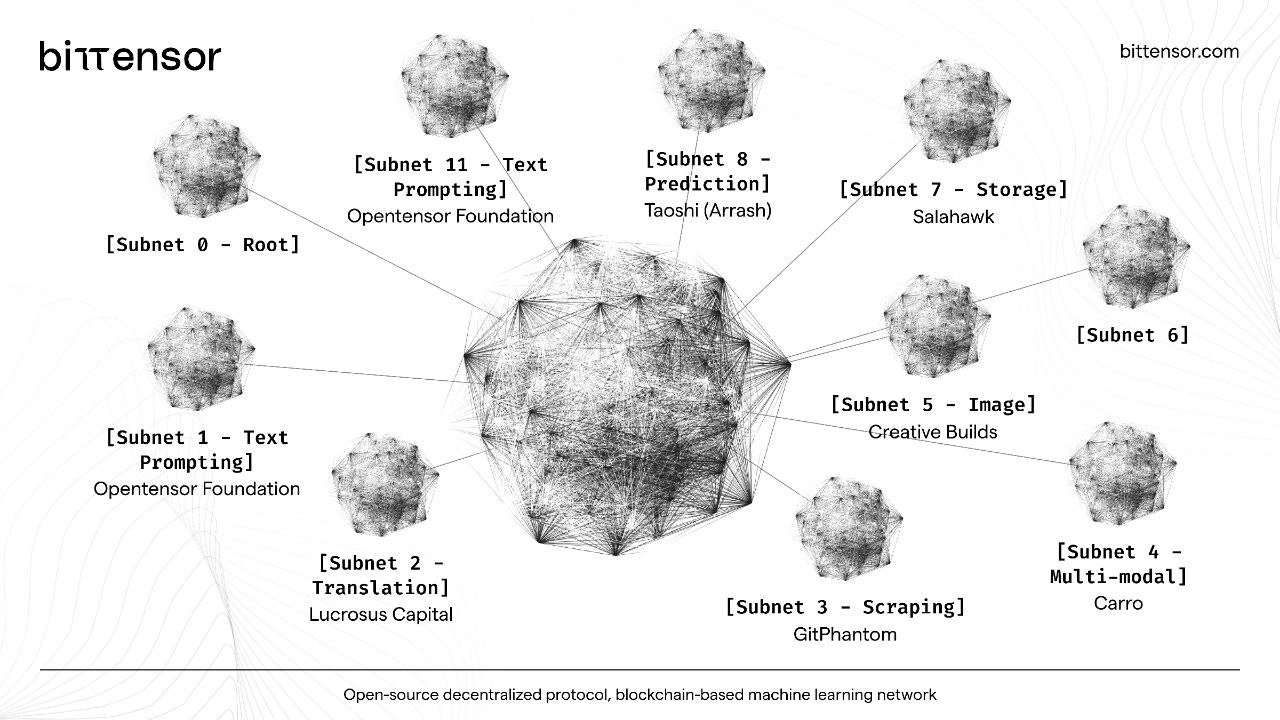
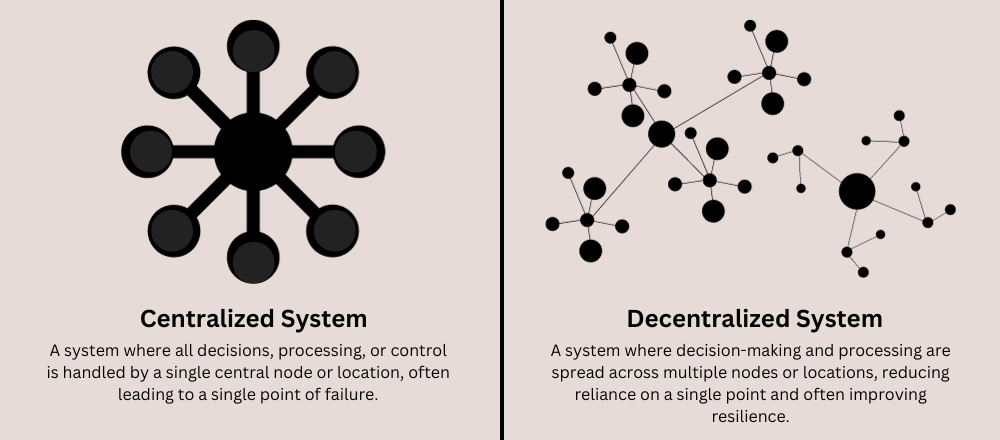
- Decentralized Markets: Just like Bitcoin created a new way to think about money that isn't controlled by one person or government, Bittensor is doing something similar but for digital goods. It's like having a bunch of small shops owned by different people instead of one big store owned by one company.
- Building Intelligence: Bittensor's main goal is to use these markets to create and share AI. AI is like a really smart computer program that can learn and make decisions. Bittensor wants to make sure that this AI is not just owned by big companies but by everyone who contributes to it.
- How It's Different from Bitcoin: While Bitcoin is all about creating and managing digital money, Bittensor is focused on creating and sharing resources like computer power and AI. It's like Bitcoin is a market for money, and Bittensor is a market for computer brains.
- For Developers and Businesses: If you're someone who makes computer programs, Bittensor offers a way to connect with others and use resources like computer power and data storage in a new way. It's like having access to a big, powerful computer that many people can use and improve together.
- Open Ownership: Just like open-source software where everyone can see and contribute to the code, Bittensor is about open ownership. This means that the people who help build and improve Bittensor can have a say in how it works and even own a part of it.

In short, Bittensor is trying to create a new way for people to work together on the internet to build and share powerful computer resources, including AI. It's like a big, shared project where everyone who helps can benefit and have a say in how it grows.
Decentralized AI and Markets
- Decentralized AI Network: Bittensor is like a big, worldwide network where people can contribute their computer's power to help build and improve artificial intelligence (AI). This is different from how AI is usually developed, which is often in big companies with lots of resources. Bittensor wants to spread this out so many people can contribute and benefit.
- Subnets and Token System: Think of Bittensor as a city with different neighborhoods (subnets). Each neighborhood specializes in something different, like one might be good at storing data, another at processing data, and so on. They all use a common currency (TAO tokens) to trade services and resources with each other.
Comparison with Bitcoin
- Bitcoin: It's a digital currency system that uses a global network of computers to maintain a ledger of transactions. It's decentralized, meaning no single entity controls it.
- Bittensor: While it shares the decentralized nature of Bitcoin, its focus is on creating a network for sharing and processing data and AI, not just transactions.
Technical Innovations
- Separation of Core Functions: Bittensor separates its basic functions (like transferring tokens) from the validation systems that define its markets. This means it can be more flexible and powerful than systems where everything is tightly integrated.
- Yuma Consensus (YC): This is the algorithm that turns validator scores into rewards. Validators rate the miners on their subnet, and Yuma Consensus combines those ratings, weighted by stake. It works like a panel of referees where a single referee who scores very differently from the rest has less say.
How does Bittensor mining work?
Mining on Bittensor is not the same as Bitcoin mining. Bitcoin miners solve puzzles to secure the ledger. Bittensor miners do useful work for a subnet: answering prompts, running models, training, or offering GPU time. Here is the flow:
- Pick a subnet. Each subnet has its own task, its own software and its own hardware needs. Many need GPUs; the subnet's documentation tells you what.
- Register. You create a wallet with a coldkey and a hotkey, then register the hotkey on the subnet. Registration costs a fee in TAO that is burned.
- Run the miner. Your machine runs the subnet's miner code and answers the tasks validators send.
- Get scored. Validators test miners and submit scores (called weights) to the chain.
- Get rewarded. Yuma Consensus combines those scores, weighted by validator stake. Within a subnet, emissions are split roughly 41% to miners, 41% to validators and 18% to the subnet owner, and they are paid in the subnet's own alpha token.
- Stay competitive. Each subnet has a limited number of slots. New miners get a short immunity period; after that, the lowest-ranked miner is replaced when someone new registers.
In other words, you earn by being better at the subnet's task than the other miners, not by having the most raw hash power.
How does Bittensor open access to advanced computing?
Advanced AI normally needs expensive hardware owned by a few large companies. Bittensor turns that work into open markets:
- On the supply side, anyone with suitable hardware can join a subnet and contribute inference, training or compute, and get paid by results.
- On the demand side, developers and businesses can use what subnets produce without buying hardware. Some subnets expose standard APIs; Chutes, a subnet for model inference, is available through OpenAI-compatible endpoints and aggregators such as OpenRouter.
- Competition sets quality. Because miners are scored constantly, the network rewards whoever does the task best, which pushes quality up over time.
Why It Matters
- For Developers: It's a playground for innovation. Developers can use Bittensor to create new applications or improve existing ones by tapping into a decentralized network of resources.
- For Businesses: It offers a new way to access computing resources and AI capabilities, potentially reducing costs and increasing efficiency.
- For Society: By decentralizing AI and computing resources, Bittensor aims to prevent the concentration of power in the hands of a few large corporations. It's about democratizing access to advanced technology.
Open Ownership
- Participation and Control: In Bittensor, anyone who contributes can have a say in how the network evolves and operates. It's like a community project where the more you contribute, the more influence you have.
Important Considerations
- Market Volatility*: Cryptocurrency prices can be highly volatile. Be aware of the risks before investing.*
- Fees*: Be mindful of trading and withdrawal fees.*
- Regulations*: Ensure that trading cryptocurrencies is legal in your jurisdiction.*
- Cutting Edge: This technology is brand new, which means they will encounter problems they will have to solve. Many startups fail so it’s important to stay mindful of the fact that they will need to prove themselves as time goes on.
Remember, investing in cryptocurrencies can be risky, so it's important to do your own research and consider your financial situation and risk tolerance before buying.
Conclusion
Bittensor is trying to change how we build and use AI and computing resources. It's not just about creating a new technology but about changing who has access to and control over this technology. By spreading out the development and benefits of AI across a global network, Bittensor aims to make these powerful tools more accessible and equitable.
Questions we actually get
What is Bittensor in simple terms?→
Bittensor is an open network of marketplaces for AI work. Each marketplace, called a subnet, produces one thing, such as text generation, model training or GPU compute. Anyone with the right hardware can contribute work, and the network rewards the best contributors. TAO is the network's token.
How does Bittensor mining work?→
Bittensor mining means doing the useful work a subnet asks for, not solving puzzles like Bitcoin mining. You choose a subnet, register a hotkey on it by burning a registration fee in TAO, and run that subnet's miner software, often on GPUs. Validators send tasks, score the results and submit those scores to the chain. Yuma Consensus combines the scores, and rewards are paid by performance in the subnet's own alpha token. Slots are limited, so after a short immunity period the lowest-ranked miners get replaced by new ones.
How does Bittensor open access to advanced computing?→
It turns AI work and computing power into open markets. Anyone with hardware can join a subnet and supply inference, training or GPU compute, so supply does not depend on one company. On the other side, developers can use what subnets produce without owning data centres. Some subnets, such as Chutes for model inference, can be reached through standard OpenAI-style APIs, including via aggregators like OpenRouter.
How are Bittensor rewards split?→
Within a subnet, new emissions are split roughly 41% to miners, 41% to validators and their stakers, and 18% to the subnet owner. How much each subnet receives in the first place is decided by the market for its alpha token. The exact rules change through network upgrades, so check the official Bittensor docs for the current model.
What is Yuma Consensus?→
Yuma Consensus is the algorithm that turns validator scores into rewards. Each validator rates the miners on its subnet; Yuma Consensus combines those ratings, weighted by each validator's stake, and limits the influence of validators whose scores are far from the rest. The result decides how the subnet's rewards are divided.
What should you consider before buying TAO?→
Crypto prices are very volatile, trading and withdrawal fees apply, and you need to check that crypto trading is legal where you live. Bittensor is also young technology that still has to prove itself. This article explains how the network works; it is not investment advice.
FILED ON THE AI VIDEO & REPURPOSING SHELF — MORE FIELD-TESTED TOOLS AND GUIDES THERE →
Never miss a verdict
One tool tested, one workflow, one future signal, one deal — every week.
One email with the goods, then the weekly letter. Unsubscribe anytime.
Keep reading
Artificial Intelligence
The 10 Prompts a Solo Marketer Actually Reuses
Not 100 prompts you'll never open again — the ten that survive contact with a real marketing week, verbatim, with the one principle that makes all of them work.
SEP 2026 · 3 MINREAD →

Artificial Intelligence
PII Redaction for LLMs: How to Keep Customer Data and Secrets Out of AI Tools
You pasted the customer list. Now what? Where personal data and secrets actually leak in everyday AI use (prompts, responses, agents, retention, shared links, logs), the ChatGPT and Claude settings that matter, why your system prompt is not a secret, four ways to redact PII before or after the model, and what GDPR means for a marketer with a CRM export.
SEP 2026 · 13 MINREAD →