
Captions, Hooks and the First Three Seconds: Anatomy of a Short Clip
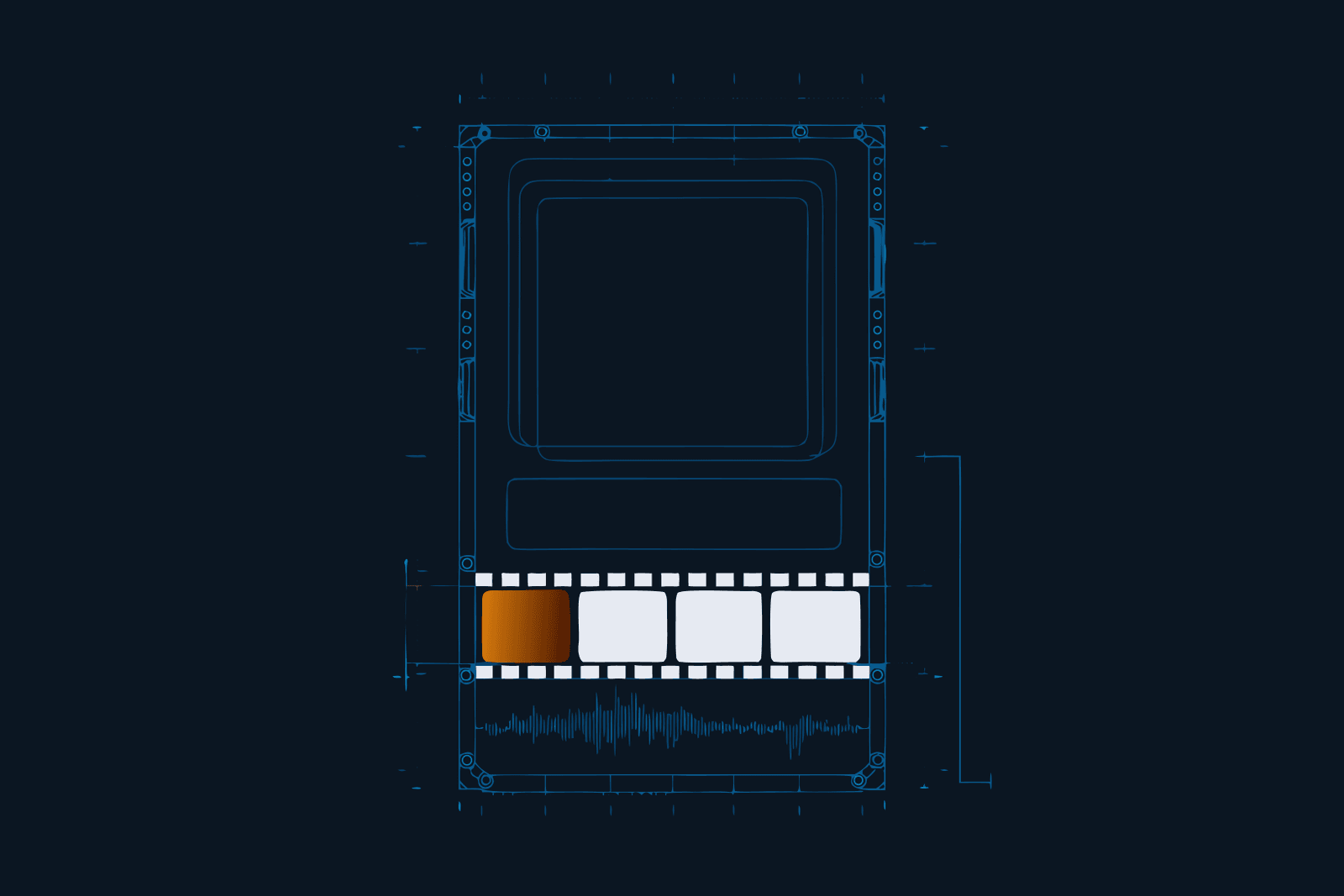
Scroll any feed and you're watching a thousand micro-verdicts: keep or flick, rendered in under a second each. A short clip survives that court on five parts, judged strictly in order. Knowing the anatomy is what separates repurposed clips that perform from the recycled-feeling kind — and it's what the AI tools can only half do for you.
Part 1: The first three seconds
Not "the hook" as a slogan — the literal opening frame. Three things must be true instantly: something is moving, text on screen states the payoff ("the €1,800 email mistake"), and the first spoken line starts mid-thought, not with hello. The brutal edit that fixes most clips: delete your first sentence — it was a warm-up, and warm-ups are for rooms where nobody can leave.
Part 2: Captions — the real interface
Most short-form viewing happens muted. That makes captions not an accessibility add-on but the primary interface: big, high-contrast, word-timed. This is one part where the AI clip tools genuinely deliver — auto-captions are accurate and styled well enough to ship. The one human check: names and product terms, which engines mangle exactly where it hurts most.
Part 3: Pacing — change every few seconds
Viewers don't leave because content is bad; they leave because nothing changed recently. A cut, a zoom, a caption emphasis, a reframe — something visible every three to five seconds resets the clock on the scrub-thumb. Clip tools handle the reframing; if a stretch of your source video has no natural movement, that's the part to cut, not decorate.
Part 4: The payoff — deliver, then stop
Whatever the hook promised, pay it in full and end. The most common self-inflicted wound in repurposed clips is stretching one payoff across sixty seconds because the tool exported sixty seconds. Completion rate is the signal platforms actually reward: a 25-second clip watched fully beats a stretched minute abandoned at 70%. Cut the outro. Yes, that one too.
Part 5: The handle
A viewer who liked it needs something to do — follow for the series, read the full breakdown, get the guide. One handle, spoken or captioned, at the moment of payoff. This is where clips stop being reach and start being funnel: our clips point at exactly one place each, and the ones pointing at the newsletter outperform the ones pointing at "the link in bio" every time. Specificity is a courtesy.
The division of labor with AI
Here's the honest split after running plenty of source video through clip engines: the tools are strong at nomination (finding candidate moments — the virality scores are a real filter used skeptically), excellent at captions and reframing, and blind at hooks and payoffs — they reward hook-shaped moments without knowing your audience or your promise. So the working ratio: let the engine cut twelve, re-hook the best eight yourself, publish those, and delete four without guilt. The deleting is a feature. Feeds forgive absence; they never forgive filler.
Questions we actually get
What makes a short clip perform?→
The first three seconds decide almost everything: a hook that names the payoff (in text on screen, not just speech), captions for the majority watching muted, and visible change every few seconds to keep viewers from scrubbing. After that, performance is whether the clip delivers what the hook promised.
Should captions be on every short video?→
Yes — a majority of short-form viewing happens muted, which makes captions the primary interface rather than an accessibility extra. Style them large, high-contrast, and word-timed; AI clipping tools generate them automatically and they're one of the few parts worth leaving on defaults.
How long should short-form clips be?→
As long as the payoff requires — usually 20–45 seconds for a single point. Completion rate beats duration: a 25-second clip watched to the end signals platforms harder than a 60-second clip abandoned at 40. Cut everything after the payoff, including the outro you're tempted to keep.
Do AI clipping tools make good clips automatically?→
They're good at finding candidate moments and excellent at captions and reframing, but their scores reward hook-shaped moments generically — they can't know your audience or rewrite the opening line. The working split: let the tool nominate, then you re-hook the best two-thirds and discard the rest.
FILED ON THE AI VIDEO & REPURPOSING SHELF — MORE FIELD-TESTED TOOLS AND GUIDES THERE →
#video marketing#short-form#AI
Never miss a verdict
One tool tested, one workflow, one future signal, one deal — every week.
One email with the goods, then the weekly letter. Unsubscribe anytime.
Keep reading
Artificial Intelligence
How to Repurpose One Webinar Into a Month of Content
One webinar holds a month of content if you treat it as raw material instead of a finished product. Get the transcript, pick five to eight moments, then turn them into clips, a blog post, an email series, carousels and quote cards, and spread it all over four weeks. Tool prices checked September 2026.
OCT 2026 · 8 MINREAD →

Artificial Intelligence
How to Build a Lead Magnet With AI in One Afternoon
One specific problem, one format, your own notes, an AI assistant and a free design tool: the afternoon recipe for a lead magnet that earns an email, from the first prompt to the tested delivery email.
OCT 2026 · 8 MINREAD →