 FUTURE PROOF MARKETER
How to Clone Your Voice Well: Consent, Recording and Settings
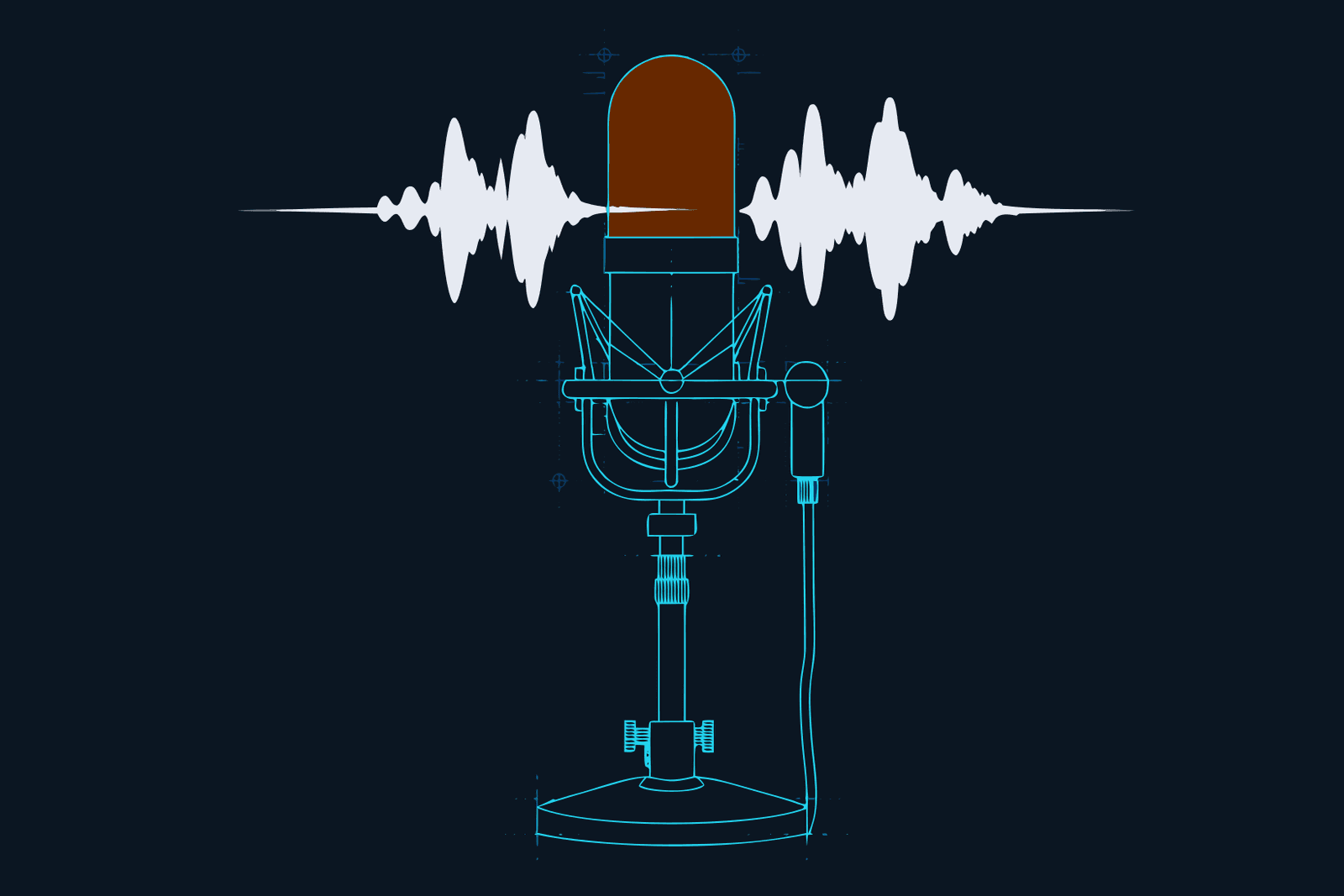
A voice clone is the highest-leverage asset in the whole AI content pipeline: record once, and every script you ever write can ship as narration, in your voice, forever. It's also permanent in a way people underestimate — the clone inherits whatever you feed it, mood included. Thirty minutes of deliberate setup is the difference between an asset and a slightly-off version of yourself that haunts your content.
Here's the setup we'd do again.
The recording: where clones are made or ruined
Room beats microphone. A decent USB mic in a quiet room with soft surfaces (curtains, a closet, a duvet fort — no shame) beats a great mic in an echoey kitchen. Voice engines faithfully reproduce room reverb as if it were your voice.
Read your own writing. The best source material is you reading your own published posts aloud — natural vocabulary, natural rhythm, no script-reading stiffness. 10–30 minutes of varied material: some explanatory, some enthusiastic, a few questions.
Record the energy you want forever. This is the step everyone gets wrong. People read training samples in a careful, flat "recording voice" — and then wonder why the clone sounds sedated. The clone is a mirror with a long memory: record at the energy of your best presenting self, one notch more animated than feels comfortable. You can't add life in post.
One session, one mic, one room. Mixing recordings from different setups teaches the model an average that matches none of them.
The test before you trust it
Before the clone narrates anything public, feed it your hardest material: your product names, industry jargon, numbers and prices, and a full paragraph of your typical writing. Every engine stumbles somewhere — ours mangles Dutch words and tool names, predictably — and it's better to catalog the stumbles now. Recurring offenders get fixed at the script level with phonetic spellings (the same trick that fixes avatar scripts); captions get the correct spelling afterward.
The two lines you don't cross
Consent is absolute. Clone your own voice freely; clone anyone else's only with explicit written permission. Reputable tools verify voice ownership for exactly this reason, and the regulatory direction on synthetic voices is one-way: tighter. If a workflow depends on an unverified voice, the workflow is the problem.
Disclose where it matters. Same logic as avatar disclosure: where a listener would reasonably assume a live recording — podcasts especially — a simple standing note ("narration produced with my AI voice clone") converts a potential gotcha into a competence signal. Your audience adjusts in a week; trust doesn't recover that fast.
What it unlocks
Done right, the clone quietly removes the biggest bottleneck in solo content: you, needing to be recorded. Written posts become narrated versions, clips get voiceovers without re-takes, translations speak in something like your voice. Our tool of choice for all of it is in the AI video comparison — but whichever engine you pick, it can only clone what you gave it. Give it your good day.
Questions we actually get
How much audio do you need to clone a voice?→
Quality tools produce a usable clone from as little as one clean minute, but the professional-grade clones come from 10–30 minutes of varied, natural speech. More audio of inconsistent quality makes clones worse, not better — a shorter, clean, energetic recording beats an hour of mumbling into a laptop mic.
Why does my AI voice clone sound flat?→
Because the source recording was flat: clones inherit the energy of their training audio permanently. Most people read sample text like a hostage statement. Re-record at the energy of your best presenting self — slightly more animated than feels natural — and the clone carries it forever.
Is voice cloning legal?→
Cloning your own voice is fine; cloning anyone else's requires their explicit consent — reputable tools enforce verification for exactly this reason, and regulations around synthetic voices continue to tighten. The practical rule: only clone voices you own or have written permission for, and disclose synthetic narration where listeners would assume it's a live recording.
Which tool should I use for voice cloning?→
ElevenLabs remains our field-tested pick for quality-per-euro — its Starter tier includes instant cloning at $6/month (checked Aug 2026), with professional cloning on higher tiers. Whichever tool you choose, the setup in this guide matters more than the vendor: input quality decides output quality everywhere.
FILED ON THE AI VIDEO & REPURPOSING SHELF — MORE FIELD-TESTED TOOLS AND GUIDES THERE →
#AI#voice cloning#video marketing
Never miss a verdict
One tool tested, one workflow, one future signal, one deal — every week.
One email with the goods, then the weekly letter. Unsubscribe anytime.
Keep reading
Artificial Intelligence
Claude Code Proxy: How to Route Claude Code Through a Gateway Without Losing Your Subscription
Claude Code has a built-in setting for sending its traffic through a proxy, and the way you set it decides whether you keep your Claude subscription or start paying per token. Here is the setting, the two ways to use it, how to check it took, and what you gain by putting a gateway in the path.
SEP 2026 · 10 MINREAD →
Artificial Intelligence
Captions, Hooks and the First Three Seconds: Anatomy of a Short Clip
A short clip has five parts, and viewers judge them in order: hook, captions, pacing, payoff, handle. Where AI clip tools help — and the two parts they can't do for you.
SEP 2026 · 2 MINREAD →