 FUTURE PROOF MARKETER
CRM for People Who Hate CRMs: A Minimal Setup for Solo Marketers
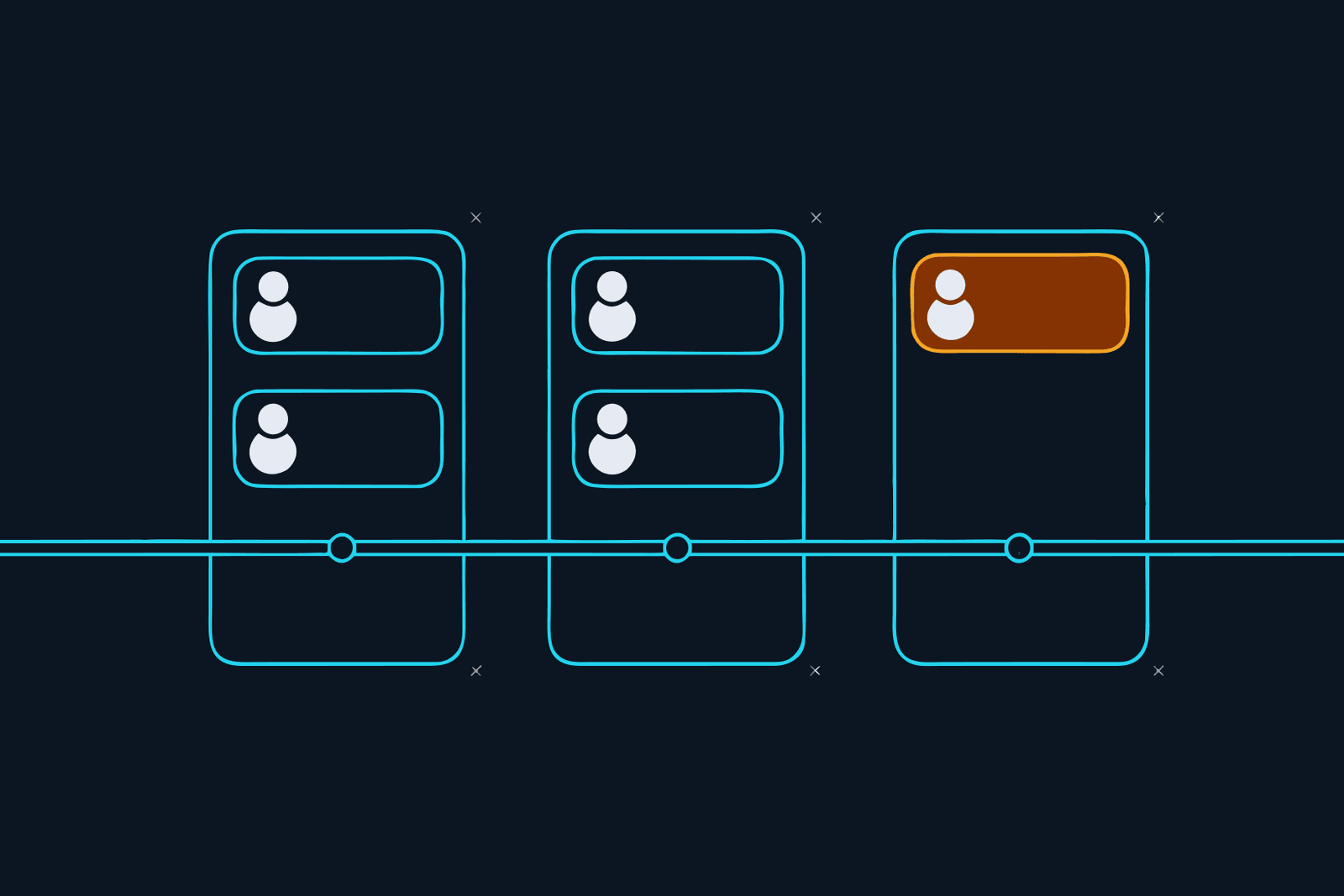
Nobody hates CRMs. What people hate is opening a tool configured for a twelve-person sales team — ten pipeline stages, twenty required fields, forecasting dashboards — to log one coffee chat. The tool wasn't wrong; the size was. Here's the CRM setup that solo marketers actually keep using, buildable in thirty minutes.
First, the honest test of whether you need one
You need a CRM the week this sentence becomes true: "I have more than five conversations in flight, and I've forgotten to follow up on at least one." That's it. Not reporting, not "scaling" — just the fact that memory doesn't have a snooze button and revenue lives in follow-ups. If you're under five parallel conversations, a notes file is genuinely fine; close this tab with our blessing.
The minimal setup
One pipeline, four stages. Talking → Interested → Proposal sent → Won/Lost. Every extra stage is a decision you'll have to make hundreds of times about where a card goes. Four stages have obvious answers; ten have opinions.
Two custom fields, no more.
- Source — where this person came from (newsletter, referral, LinkedIn, that one post). In six months this field quietly becomes your marketing strategy: it's the ground truth of which channel produces conversations, not just clicks.
- Next action + date — the field that is the CRM. Every card has exactly one next action or it's in Won/Lost. A card without a next action is a follow-up already being forgotten.
One weekly habit. Fifteen minutes in the Friday review: move cards, clear overdue next-actions, archive the dead. The CRM's value is exactly proportional to this habit and completely independent of its feature list.
Everything you didn't configure is a feature. No lead scoring, no automation between stages, no dashboard. Absence of configuration is what keeps the tool fast enough that you'll still be using it in March.
The tooling (this got easy recently)
The minimal setup used to require paying for software built for teams. It doesn't anymore: Attio's free tier — 3 seats, 50k records, pipelines, email sync, checked Aug 2026 — covers this entire post at solo scale, and it's the rare CRM that feels like a modern product instead of enterprise furniture. HubSpot's free CRM is the incumbent fallback if you want the ecosystem you may already be in.
And deliberately: keep email marketing out of the CRM. Sequences and newsletters are list-scale work for your email tool; the CRM is conversation-scale. All-in-one suites sell the merger of these jobs, and the merger is exactly what makes them heavy. Two small tools, each doing one job, cost less than one suite doing both averagely — that's the whole under-€100 philosophy.
What to steal from big-team CRM culture (one thing)
The single ritual worth importing: lost reasons. When a card hits Lost, write one honest phrase — too expensive, bad timing, chose competitor, ghosted. Six months of lost-reasons is the most truthful market research a solo operation will ever own, and it costs four seconds per loss. Everything else the big teams do, you're allowed to skip. That's the privilege of being small; the minimal CRM is how you keep it.
Questions we actually get
Does a solo marketer or freelancer actually need a CRM?→
The moment more than five conversations run in parallel, yes — not for reporting, but because follow-ups forgotten are revenue lost, and memory doesn't scale. What a solo operator doesn't need is the team-sized configuration that makes CRMs feel like a second job.
What is the simplest CRM setup that works?→
One pipeline with four stages (Talking, Interested, Proposal sent, Won/Lost), two custom fields (where they came from, and the next action with a date), and a weekly fifteen-minute review moving cards and clearing stale next-actions. Everything beyond that is optional until proven otherwise.
What's the best free CRM for one person?→
As of August 2026, Attio's free tier is the standout for a team of one — up to 3 seats and 50,000 records with pipelines and email sync, and it's a genuinely modern product rather than a crippled trial. HubSpot's free CRM remains a capable fallback if you prefer the incumbent ecosystem.
Should the CRM be connected to email marketing?→
Keep them separate jobs: the CRM tracks individual conversations and follow-ups; the email tool runs sequences and newsletters at list scale. Pairing a free CRM with a budget email tool covers both for a fraction of an all-in-one suite — and each piece stays simple enough to actually use.
FILED ON THE THE SOLO MARKETER STACK SHELF — MORE FIELD-TESTED TOOLS AND GUIDES THERE →
#CRM#solo marketing#productivity
Never miss a verdict
One tool tested, one workflow, one future signal, one deal — every week.
One email with the goods, then the weekly letter. Unsubscribe anytime.
Keep reading
Artificial Intelligence
Claude Code Proxy: How to Route Claude Code Through a Gateway Without Losing Your Subscription
Claude Code has a built-in setting for sending its traffic through a proxy, and the way you set it decides whether you keep your Claude subscription or start paying per token. Here is the setting, the two ways to use it, how to check it took, and what you gain by putting a gateway in the path.
SEP 2026 · 10 MINREAD →
Artificial Intelligence
Constellation Gate AI Review (2026): One Switch That Cuts Your AI Bill and Watches Your Back
Gate sits between Claude, ChatGPT, Codex or your agents and the model, strips the tokens you were paying for twice, blocks prompt injection before it reaches the model, and keeps a tamper-evident log of everything. Free to start. Here is what it does, what it costs, and who should bother.
SEP 2026 · 14 MINREAD →